Articles

Noble Eyes Blog

Noble Eyes Blog is your trusted source for informative articles, expert insights, and valuable tips related to eye health and vision care. Explore a wealth of knowledge on topics ranging from eye conditions, vision correction options, to maintaining optimal eye wellness. Stay informed and prioritize your eye health with our engaging and educational blog content.

Medmont Topography

Medmont Topography

When it comes to diagnosing and managing complex vision conditions, precision matters. One of the most advanced tools is Medmont topography - a state-of-the-art technology that provides highly detailed maps of the cornea. Whether you are being evaluated for specialty contact lenses, dry eye treatment, or refractive surgery, Medmont topography plays a critical role in delivering accurate, customized care. 


What Is Medmont Topography? 

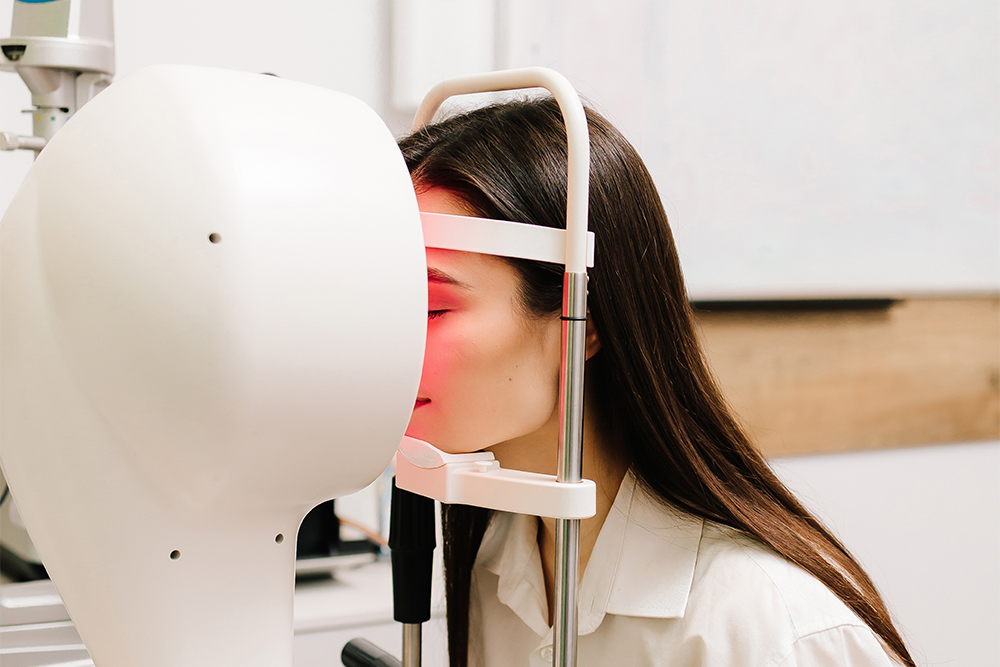
Medmont topography refers to corneal imaging performed with the Medmont E300 Corneal Topographer, a diagnostic device designed to capture detailed curvature measurements of the cornea. 

Using advanced Placido disc technology, the system projects illuminated rings onto the cornea and analyzes their reflections. From this data, it generates a color-coded map that reveals the shape, elevation, and curvature of the cornea with exceptional accuracy. 
 

Why Is Corneal Topography Important? 

The cornea is responsible for approximately two-thirds of the eye’s focusing power. Even subtle irregularities can significantly affect vision. Medmont topography allows your eye doctor to detect and monitor: 

  • Keratoconus and other corneal ectasias

  • Corneal irregularities or scarring

  • Post-surgical corneal changes

  • Astigmatism patterns

  • Contact lens fitting complications

  • Early signs of corneal distortion 


Because it provides highly detailed imaging, Medmont topography often identifies changes long before they become noticeable in a routine vision exam. 
 

How Medmont Topography Improves Contact Lens Fitting 

For patients who require specialty contact lenses - such as scleral lenses, hybrid lenses, or lenses for keratoconus - precise corneal mapping is essential. 

  • The Medmont system offers: 

  • High-resolution curvature data

  • Wide corneal coverage

  • Repeatable, reliable measurements

  • Advanced software analysis 
     

This allows your doctor to design and fit custom lenses with greater accuracy, improving comfort, stability, and visual clarity while reducing trial-and-error fittings. 

Read more
Vision Therapy: Conditions

Vision Therapy: Conditions

Vision therapy is a specialized form of treatment that aims to improve visual function and performance. It involves a series of eye exercises, activities, and visual training techniques designed to address a wide range of vision-related issues. Unlike traditional eye care, which often focuses on correcting refractive errors with glasses or contact lenses, vision therapy takes a holistic approach to addressing the underlying causes of visual problems.

By targeting the root causes of these issues, vision therapy can help individuals achieve better visual function, improve their overall well-being, and enhance their ability to perform daily tasks with greater ease and efficiency.
 

Amblyopia

Amblyopia, commonly known as "lazy eye," is a common vision condition that affects approximately 2-3% of the population. It occurs when one eye develops reduced visual acuity due to the brain's inability to properly process information from that eye.

In many cases, amblyopia develops during childhood, often due to factors such as refractive errors, strabismus (misaligned eyes), or visual deprivation. If left untreated, amblyopia can lead to permanent vision loss in the affected eye, as the brain increasingly favors the stronger eye and the weaker eye's visual processing abilities deteriorate.

Vision therapy is a highly effective treatment for amblyopia, as it aims to retrain the brain to properly utilize the weaker eye. Through a series of specialized exercises and activities, vision therapy can strengthen the neural pathways between the brain and the affected eye, improving visual acuity and binocular vision.

The key to successful treatment lies in the brain's remarkable ability to adapt and change, known as neuroplasticity. By engaging in targeted vision therapy, individuals with amblyopia can stimulate this neuroplasticity, allowing the brain to reorganize and improve its processing of visual information from the weaker eye.
 

Strabismus

Strabismus, also known as crossed eyes or misaligned eyes, is a condition where the eyes do not properly align with each other. This can cause one eye to turn inward, outward, upward, or downward, resulting in a lack of binocular vision and depth perception.

Strabismus can have a significant impact on an individual's visual function, self-esteem, and overall quality of life. Left untreated, it can lead to the development of amblyopia (lazy eye) and other vision-related problems.

Vision therapy is a highly effective treatment for strabismus, as it focuses on retraining the brain and the eye muscles to work together in a coordinated manner. Through a series of specialized exercises and activities, vision therapy can help individuals with strabismus improve their eye alignment, binocular vision, and depth perception.
 

Binocular Vision Disorders

Binocular vision disorders are a group of conditions that affect the way the eyes work together as a team. These disorders can result in a range of visual problems, including difficulty with depth perception, eye strain, headaches, and difficulties with reading and other visual tasks.

Some common binocular vision disorders that can be effectively treated with vision therapy include:

  • Convergence Insufficiency: This condition is characterized by the inability of the eyes to properly converge, or come together, when focusing on a close object. This can lead to eye strain, headaches, and difficulties with reading and other near-work activities.

  • Accommodative Dysfunction: Accommodative dysfunction is a problem with the eye's ability to focus, or "accommodate," on near objects. This can cause blurred vision, eye strain, and difficulties with reading and other close-up tasks.

  • Vergence Dysfunction: Vergence dysfunction refers to a problem with the eye's ability to work together to maintain proper alignment and focus. This can lead to double vision, eye strain, and difficulties with depth perception.
     

Through vision therapy, individuals with binocular vision disorders can retrain their visual system to work more efficiently and effectively. The goal of vision therapy is to improve the coordination and synchronization of the eyes, ultimately leading to better visual performance and reduced visual symptoms.

Read more
Post-Surgical Contact Lenses

Post-Surgical Contact Lenses

If you have recently undergone eye surgery, your eye doctor may recommend the use of post-surgical contact lenses as part of your recovery process. These specialized lenses are designed to aid in the healing and protection of your eyes after surgery.
 

Why Post-Surgical Contact Lenses May Be Necessary

After eye surgery, your eyes are in a delicate state and require extra care to ensure proper healing. Post-surgical contact lenses can play a crucial role in this process. These lenses act as a protective barrier, shielding your eyes from irritants such as dust, debris, and bright lights. They also help to maintain the shape of the cornea and aid in the prevention of infection. By wearing post-surgical contact lenses, you can minimize the risk of complications and promote a faster and smoother recovery.
 

Different Types of Post-Surgical Contact Lenses

There are various types of post-surgical contact lenses available, and the specific type recommended for you will depend on the nature of your surgery and your eye condition. One common type is the bandage contact lens, which is a soft, therapeutic lens that covers the cornea, providing protection and promoting healing.

Another type is scleral lenses, which is larger and covers a larger portion of the eye, providing enhanced protection and support. Your optometrist will determine the most suitable type of post-surgical contact lens for your individual needs.

Read more
CLE

CLE

Clear Lens Extraction (CLE) is a surgical procedure that involves the removal of the natural lens of the eye and replacing it with an artificial lens implant, also known as an intraocular lens (IOL). CLE is primarily performed to correct refractive errors, such as nearsightedness, farsightedness, and astigmatism.

Understanding CLE and How It Works

Clear Lens Extraction is similar to cataract surgery, where the natural lens is removed and replaced with an IOL. However, in CLE, the lens is clear and not clouded as in the case of cataracts. The procedure begins with the administration of local anesthesia to numb the eye and ensure a painless experience for the patient.
 

Once the eye is numb, a small incision is made on the cornea, which is the clear front surface of the eye. Through this incision, your eye surgeon accesses the lens and carefully removes it. The artificial IOL is then inserted into the empty lens capsule. The IOL is specifically chosen to correct the patient's refractive error, providing them with improved vision.
 

After the IOL is implanted, the incision is closed with tiny sutures or self-sealing techniques. Following the surgery, patients are usually prescribed antibiotic and anti-inflammatory eye drops to prevent infection and reduce inflammation.

Factors to Consider Before Undergoing Clear Lens Extraction

Before deciding to undergo Clear Lens Extraction, there are several factors that need to be considered. Firstly, it is crucial to have a thorough eye examination to determine if you are a suitable candidate for the procedure. Your optometrist will evaluate your overall eye health and discuss your expectations and goals for vision correction.
 

Age is another important factor to consider. CLE is typically recommended for individuals over the age of 40 who have developed presbyopia, a condition that affects near vision. It is also important to have stable vision, as any changes in prescription can affect the accuracy of the IOL power calculation.
 

Additionally, it is essential to understand the potential risks and complications associated with the procedure. While CLE is generally safe, there is a small risk of infection, bleeding, and retinal detachment. Your optometrist will discuss these risks with you and address any concerns you may have.

Read more
Lens Technology

Lens Technology

Thanks to the advancement of lens technology, glasses lenses are no longer a single, one size fits all solution. There are a variety of different lens types that can be used in glasses, giving patients greater flexibility and control over their vision than ever before.

Single Vision Lenses

Also known as monovision lenses, these lenses are designed to correct the wearer’s vision at just one distance, and have a single prescription covering the entire surface of the lens. They are most often recommended for people who are either nearsighted (myopia) or farsighted (hyperopia) and who need glasses for a specific activity, such as driving or reading.

Progressive Lenses

Progressive lenses are multifocal lenses that can correct a patient’s vision at different working distances, ranging from far distance to reading distance. However, rather than designating different areas on the lenses for different distances with visible lines separating them, progressive lenses have a gradual change so that the wearer can smoothly transition from one lens power to another.

Bifocal and Trifocal Lenses

As you may have guessed from the name, bifocal and trifocal lenses have either two or three lens powers depending on which type you choose. Bifocal lenses support distance vision in the top half of the lens, and near vision in the lower half. Trifocal lenses support distance vision in the top third of the lens, intermediate vision in the middle segment and near vision in the bottom third. Whichever variety you choose, you will see visible lines separating each segment.

Bifocal and trifocal lenses are recommended for patients who are near or farsighted, and those who develop presbyopia, which is the natural hardening of the eye lens, that occurs as we get older. Presbyopia makes it harder for the lens of the eye to adapt to focus at different distances.

Multifocal Lenses

Multifocal lenses are the alternative name given to bifocal, trifocal and progressive lenses.

Read more
Eyelid Hygiene

Eyelid Hygiene

Eyelid hygiene is an essential aspect of maintaining optimal eye health. Your eyes are sensitive organs that require proper care and attention. Neglecting eyelid hygiene can lead to various problems, including dry eye.
 

Recognizing the Symptoms of Eyelid Problems

It is crucial to recognize the symptoms of eyelid problems to seek timely treatment and prevent further complications. Common symptoms of eyelid issues include redness, swelling, itching, irritation, crusting or scaling of the eyelids, sensitivity to light, and a sensation of something in the eye.
 

The Importance of Eyelid Hygiene in Maintaining Eye Health

Maintaining proper eyelid hygiene is essential for overall eye health. Regularly cleaning your eyelids helps remove debris, bacteria, and excess oil, preventing infections and inflammation. It also promotes the proper functioning of the meibomian glands, ensuring an adequate supply of tears to keep your eyes moisturized. By incorporating eyelid hygiene into your daily routine, you can significantly reduce the risk of developing dry eye and other eye-related problems.

Read more
EnChroma Lens Technology

EnChroma Lens Technology

If you find it difficult to tell colors apart, you may be color blind. Color blindness, or color deficiency, is estimated to affect around 8% of men and about 1% of women, but for those affected, it can significantly impact the quality of their day-to-day life. Contrary to popular belief, being color blind doesn’t mean that you can’t see any color at all. Instead, patients simply struggle to differentiate between certain colors. The vast majority of people who are color blind find it impossible to tell the difference between varying shades of red and green. You may hear this referred to as red-green color deficiency. However, this doesn’t only mean that they mix up red and green. They can also mix up colors that have some green or red light as part of their whole colors, for example purple and blue. This is because they are unable to see the red light that forms part of the color purple. 

As you can probably imagine, this type of visual impairment can be a problem for things like traffic lights, taking medications and even looking at signs and directions. For example, someone who is color blind may find that the green on a traffic light may appear white or even blue.

Read more
Blephex

Blephex

Our eyes are extremely delicate, yet they can be subjected to harsh conditions and other environmental factors that affect their health. One of the problems that can affect our eyes is an accumulation of dirt, debris and bacteria on the eyelids. This can cause a range of issues, including stopping tear film from reaching the eyes and being properly dispersed over their surface – which is necessary to keep them healthy and comfortable. Fortunately, a new solution called Blephex® can help.
 

What is Blephex®?

Blephex® is a handheld electro-mechanical device that is applied to the margins of the eyelids with the purpose of cleaning them and improving the effectiveness with which tear film flows onto the surface of the eyes.

Blephex® has a disposable, surgical-grade sponge tip which rapidly oscillates to create a cleaning action. Before the sponge tip is placed onto the eyes, it is soaked in a gentle exfoliating solution. This solution provides soft abrasion to help remove dead skin cells and debris that could be irritating the eyes and interrupting tear film progression. The Blephex® device is manually applied to the eyes and moved gently across the eyelids, with the entire, painless process taking approximately 6 to 8 minutes per eye. A different sponge is used on each eye, ensuring that no bacteria is passed between them. After the procedure, patients are given instructions on how to maintain the cleanliness of their eyelids with daily/nightly eyelid hygiene at home.

Most patients experience a significant improvement in tear film production and dispersal, and a reduction in unpleasant symptoms that they may have been experiencing within 48 hours of their treatment. While a single treatment is normally enough to produce excellent results, many patients are advised to have Blephex® every 4-6 months.

Read more
Tonometer

Tonometer

A tonometer refers to the equipment that is used in tonometry – a test that measures the pressure inside your eyes, also known as intraocular pressure or IOP for short. Tonometry is rarely performed at your average comprehensive eye exam unless you are at high risk of or have been already diagnosed with glaucoma. Fortunately, tonometry can be used to detect changes in eye pressure before they cause any symptoms, enabling prompt action to be taken before your vision is affected.
 

About Glaucoma

Glaucoma is a common eye condition that occurs when the optic nerve, which connects the eye to the brain, becomes damaged. It’s normally caused by fluid building up in the front part of the eye, which causes the pressure inside the eyes to build. As the pressure increases, the optic nerve becomes increasingly damaged, and this prevents messages from being transmitted between your eyes and brain effectively. As a result, the patient’s vision becomes compromised. Without treatment, the level of vision loss will continue to increase. Unfortunately, any vision that has been lost as a result of glaucoma cannot be restored.

Most of the time, glaucoma develops very slowly which means that many people don’t realize that they are affected until some damage to their vision has already occurred. However, occasionally glaucoma can develop quickly, and symptoms do occur.
 

Glaucoma symptoms can include:

  • Red eyes

  • Intense headaches

  • Tenderness around the eyes

  • Eye pain

  • Seeing rings/halos around lights

  • Blurred vision

  • Nausea and vomiting
     

If you notice any of these symptoms, it’s important that you make an appointment with your eye doctor right away so that you can be assessed. You are likely to have a tonometry test as part of this assessment.

Read more
Retinal Imaging Testing

Retinal Imaging Testing

When it comes to maintaining your eye health, regular check-ups and screenings play a crucial role. One such screening method that has revolutionized the field of optometry is retinal imaging testing. This non-invasive procedure allows optometrists to capture detailed images of the retina, providing valuable insights into the overall health of your eyes.
 

The Importance of Retinal Imaging Testing

By examining the retina, which is the thin layer of tissue at the back of your eye responsible for capturing light and transmitting visual signals to the brain, optometrists can gain valuable insights into your eye health. Retinal imaging testing allows for the early detection of various eye conditions even before noticeable symptoms occur. This early detection is crucial as it enables prompt treatment and intervention, potentially preventing irreversible vision loss.
 

Advanced Retinal Imaging Technology

Retinal imaging testing has been made possible by the advancements in technology, specifically Optical Coherence Tomography (OCT) and Optos imaging. OCT is a non-invasive imaging technique that uses light waves to capture high-resolution cross-sectional images of the retina. It provides detailed information about the layers of the retina, helping eye doctors identify and monitor various eye conditions.

Optos imaging utilizes ultra-widefield retinal technology to capture a panoramic image of the retina. This technology allows for a more comprehensive view of the retina, including the periphery. Dilating drops are not necessary with Optos, making the process more convenient for patients.

Read more
 
Helpful Articles
all eye care services
All Eye Care Services

Find personalized eye care excellence with our comprehensive services. From eye exams to advanced diagnostics, trust us for all your vision needs.

contact us
Keep In Touch

For non-urgent questions or to learn more about our services, contact us today!